

 摘要:
Modern C++ Tutorial:掌握现代 C++ 编程的完整指南 项目概述 Modern C++ Tutorial 是由 changkun 创建并维护的开源教程项目,旨在帮...
摘要:
Modern C++ Tutorial:掌握现代 C++ 编程的完整指南 项目概述 Modern C++ Tutorial 是由 changkun 创建并维护的开源教程项目,旨在帮... 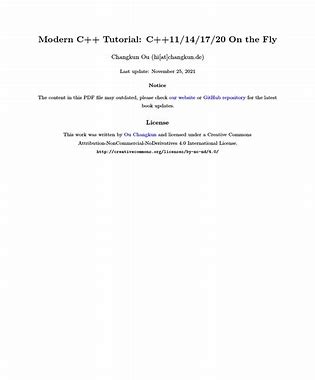
Modern C++ Tutorial:掌握现代 C++ 编程的完整指南
项目概述
Modern C++ Tutorial 是由 changkun 创建并维护的开源教程项目,旨在帮助开发者系统性地学习和掌握现代 C++(C++11/14/17/20)的核心特性。该项目不仅提供了清晰的理论讲解,还包含了大量实用的代码示例,是 C++ 开发者提升技能的宝贵资源。
项目特点
1. 系统性知识结构
教程按照 C++ 标准演进的时间线组织内容,从 C++11 的基础特性开始,逐步深入到 C++20 的最新功能,形成完整的学习路径。
2. 实践导向
每个概念都配有可直接运行的代码示例,让学习者能够立即验证和理解。
3. 中英双语支持
项目提供中文和英文两种版本的文档,满足不同开发者的学习需求。
4. 持续更新
随着 C++ 标准的演进,项目持续更新,保持与最新技术同步。
核心内容示例
示例 1:自动类型推导(C++11)
text
#include <iostream>
#include <vector>

int main() {
    // auto 关键字让编译器自动推导类型
    auto i = 42;           // int
    auto d = 3.14;         // double
    auto s = "hello";      // const char*

    std::vector<int> vec = {1, 2, 3, 4, 5};

    // 范围-based for 循环
    for (auto& num : vec) {
        num *= 2;  // 修改原向量元素
    }

    for (const auto& num : vec) {
        std::cout << num << " ";
    }

    return 0;
}
示例 2:Lambda 表达式(C++11)
text
#include <iostream>
#include <algorithm>
#include <vector>

int main() {
    std::vector<int> numbers = {5, 2, 8, 1, 9, 3};

    // 使用 lambda 表达式排序
    std::sort(numbers.begin(), numbers.end(),
              [](int a, int b) { return a > b; });

    // 使用 lambda 表达式过滤
    int threshold = 5;
    auto it = std::remove_if(numbers.begin(), numbers.end(),
        [threshold](int x) { return x < threshold; });

    numbers.erase(it, numbers.end());

    // 输出结果
    std::for_each(numbers.begin(), numbers.end(),
        [](int x) { std::cout << x << " "; });

    return 0;
}
示例 3:智能指针(C++11/14)
text
#include <iostream>
#include <memory>

class Resource {
public:
    Resource() { std::cout << "Resource acquired\n"; }
    ~Resource() { std::cout << "Resource destroyed\n"; }
    void use() { std::cout << "Resource used\n"; }
};

int main() {
    // unique_ptr:独占所有权
    {
        std::unique_ptr<Resource> ptr1 = std::make_unique<Resource>();
        ptr1->use();

        // 所有权转移
        std::unique_ptr<Resource> ptr2 = std::move(ptr1);
        if (!ptr1) {
            std::cout << "ptr1 is now empty\n";
        }
    } // ptr2 离开作用域,资源自动释放

    // shared_ptr:共享所有权
    {
        std::shared_ptr<Resource> ptr3 = std::make_shared<Resource>();
        {
            std::shared_ptr<Resource> ptr4 = ptr3; // 引用计数增加
            ptr4->use();
        } // ptr4 离开作用域,引用计数减少

        std::cout << "Use count: " << ptr3.use_count() << "\n";
    } // ptr3 离开作用域,资源释放

    return 0;
}
示例 4:结构化绑定(C++17)
text
#include <iostream>
#include <tuple>
#include <map>

std::tuple<int, std::string, double> getPerson() {
    return {25, "Alice", 170.5};
}

int main() {
    // 结构化绑定解包元组
    auto [age, name, height] = getPerson();
    std::cout << name << " is " << age << " years old, "
              << height << "cm tall.\n";

    // 结构化绑定遍历 map
    std::map<std::string, int> scores = {
        {"Alice", 95},
        {"Bob", 88},
        {"Charlie", 92}
    };

    for (const auto& [student, score] : scores) {
        std::cout << student << ": " << score << "\n";
    }

    return 0;
}
学习路径建议
- 初学者路线:从 C++11 的基础特性开始,如 auto、范围for循环、lambda表达式
- 中级开发者:深入学习移动语义、智能指针、并发编程
- 高级主题:探索模板元编程、概念(C++20)、协程(C++20)
项目价值
Modern C++ Tutorial 项目的价值在于: - 降低了学习现代 C++ 的门槛 - 提供了从理论到实践的完整学习体验 - 帮助开发者编写更安全、更高效的代码 - 促进 C++ 最佳实践的传播和应用
无论你是 C++ 初学者还是有经验的开发者,这个项目都能为你提供有价值的参考和学习材料。通过实际编写和运行示例代码,你可以更快地掌握现代 C++ 的强大功能,提升编程技能和代码质量。
modern-cpp-tutorial_20260205031831.zip
类型:压缩文件|已下载:0|下载方式:免费下载
立即下载




还没有评论,来说两句吧...